Sunday, March 20, 2022

March 15th – Finding Paradise in La Digue and Praslin

Today we got two for the price of one, as we visited the neighbouring Seychelles islands of La Digue and Praslin.

Our first stop in La Digue was utterly idyllic. As we stepped off the tender in the small village of La Passe, you couldn’t have imagined a more relaxed scene, people meandering around its quiet streets on bicycles, with a backdrop of lush green hills and turquoise seas. 

Our mission today was to hike the length of the island down to the secluded Grand Anse. On an island where almost everyone walks or cycles, there’s not many places in the world where as you hike along the island’s main road, you get passed by maybe ten cars or trucks at the very most. The peaceful road took us past a nature reserve, so we were constantly accompanied by the chirping of exotic birds in a tranquil atmosphere where even the stray dogs were friendly.

It was an extremely hot and humid day, but it was bliss just savouring this unspoilt environment, before our view of paradise was completed as we emerged onto the blinding white sands of Grand Anse – one of the most beautiful beaches I’ve ever been to. To confirm how romantic a spot it is, a (rather sweaty) couple were getting married up one end of it.

As we walked we couldn’t help forming a plan to spend more time here – our enthusiasm was only slightly tempered by a bumping into a couple from the ship who told us that they’d just paid $54 dollars for 2 Pina Coladas! Maybe paradise comes at a price.

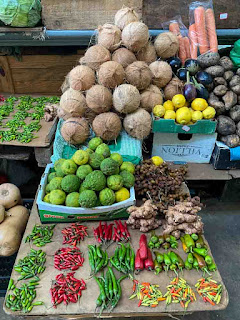
In the afternoon, we called in at the slightly more developed island of Praslin, famous for being one of only two islands where the extremely rare coco de mer grows – a suggestively shaped nut (use your imagination) that has all kinds of legends attached to it (not surprisingly, most of them relate to sex).

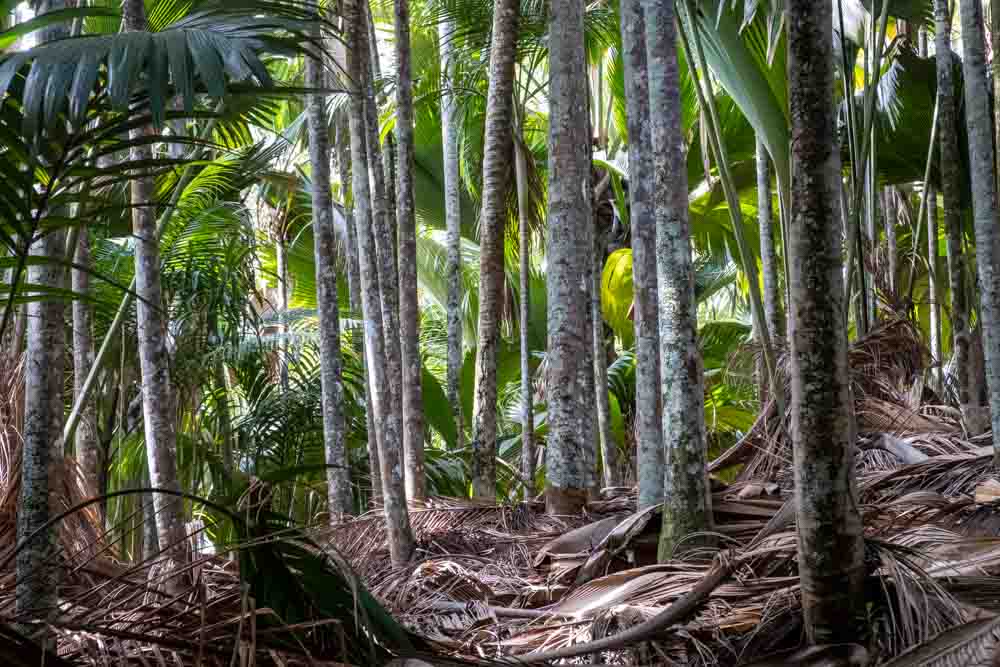
We visited the unspoilt Vallee de Mai, a forest that’s home to thousands of swaying coco de mer trees and other prehistoric-looking flora with huge leaves and weird shapes. In this quiet forest, where the only sounds were creaking branches, rustling leaves and cooing birds – you half-expected to see a velociraptor skulking in the undergrowth.

After our time in the Garden of Eden, we moved on for some beach time on the Cote d’Or, yet another gorgeous beach of amazingly warm waters and soft sands. 

I think we have found paradise! 


Sunday, March 13, 2022

March 9th-11th – Hakuna Matata (No Worries) in Zanzibar

Before I came to Zanzibar, I thought that “Hakuna Matata” was just a cheesy Disney song. Actually, it’s a Swahili phrase that you hear all the time, meaning “No worries”. It sums up the kind of relaxed, easy-going pace of life that’s dictated by the incredibly hot weather here, where you just have to accept that everything will go along at its own slow pace, and that not everything will go to plan. The exotic atmosphere of this beautiful, but crumbling, town more than compensates for the sense of chaos running just below the surface.

Actually, I’m not sure that “No Worries” is quite the attitude I’m taking for the current state of Zanzibar. I worry about the impact of the pandemic on an island whose economy almost totally relies on tourism – you just have to see the groups of people sitting around with nothing to do, to know that the economy is hurting. I worry about the dilapidated state of so many of Stone Town’s historic buildings – the House of Wonders (it’s most impressive building from its years as an Arab Sultanate) collapsed during botched renovations in 2020 and who knows when it will be rebuilt. I also worry whether the city has its priorities right as it tries to balance tourism and everyday life. There are some really beautiful hotels and restaurants, right alongside some very basic lifestyles – for the time being people are overwhelmingly friendly and polite, I just hope that the economic disparities don’t begin to grate on the locals. 

However, for the time being, Zanzibar remains a wonderfully exotic, exciting and exhausting place to explore – as you turn every corner in Stone Town’s maze of alleys, there’s always something to see; as you drive around the island, the street scenes alternate between chaotic hives of activity, to indolent inactivity. 

There’s another Swahili phrase you hear all the time here on Zanzibar – “Pole, Pole” – “Slowly, Slowly”. Change happens slowly; traffic here moves slowly; and life proceeds slowly. Maybe I should stop worrying about Zanzibar’s future, and just enjoy its exotic present. Hakuna Matata.

PS. We did a lot of tours over our wonderful three days here – spice plantations, palace ruins, monkey forests, Freddie Mercury Museum, Slavery Museum, and plenty of Stone Town walking too.


Sunday, March 6, 2022

March 5th – A Taste of Maputo

I’ve been coming to Maputo (Mozambique’s sultry capital) for over a decade now, and normally I’d be left with a feeling that things have been slowly getting better in a country that had been torn apart by so many years of Colonialism, Communism and Civil War. However, last time I was here (in 2019) it felt like the city was going backwards, as corruption and economic stagnation saw life for its ordinary citizens get significantly tougher. So, it was going to be interesting to see what impact the global pandemic had had on this struggling city.

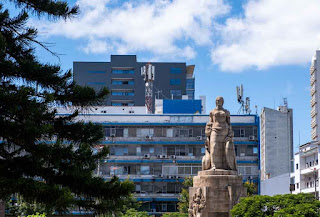
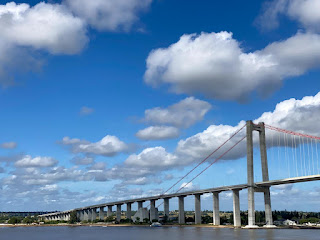
I have to admit that I was pleasantly surprised. There were signs of progress all around – new tower blocks and building projects abounded, the litter problem had improved, while there appeared to be a number of nice-looking new restaurants around the city and along the re-developed riverfront. So, some people were clearly doing well – although, from the sheer desperation of the vendors who surrounded our bus at every stop, it was clear that poverty was still a significant issue here. However, the city appeared to be in much better shape than you’d expect for a country that officially has the 6th lowest GDP per capita in the world (just $1,200 p.a.).

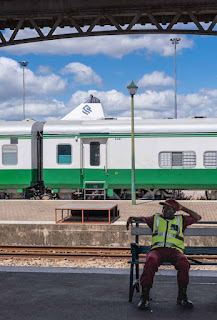
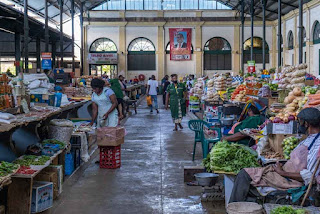
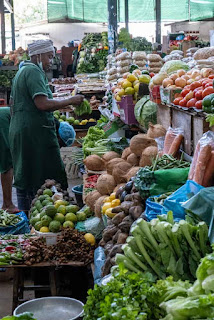
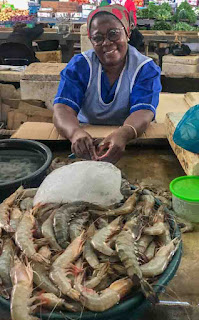
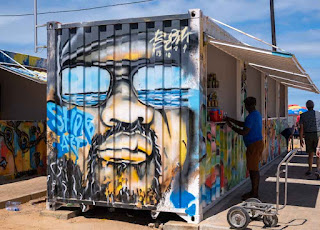
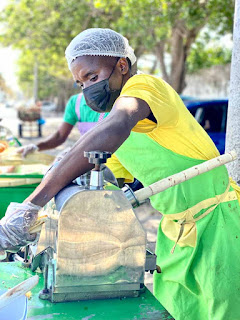
I joined a “Foodie Tour” that took us around various venues in the city where we could sample typical Mozambican cuisine, in venues where the ordinary people would eat. It was a great way to get a taste for the city in more ways than one. We sampled sugary-coconuty delights at the magnificent train station, we had cashew nuts at the teeming market, we tried deep fried badjias (bean dumplings) by the side of the road, we feasted on delicious grilled chicken by the beach, and we had other traditional dishes at the artisans market. All were really tasty, and it was great to stop in so many different venues and mix with the ordinary people.

Maybe it was just down to the great food, but I got a much more positive vibe from the city than I did on my last visit here. Let’s hope that it wasn’t a mirage, and that things really are getting better for all the citizens of this wonderful country. 


Saturday, March 5, 2022

March 2nd and 3rd – The Many Faces of Durban

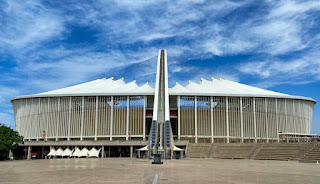
On the face of it – Durban has it all. It has a fabulous sun-kissed environment. It has gorgeous beaches. And it has a thriving economy – the huge port we were docking in was busy with exports of cars, sugar, and other locally grown and produced goods.

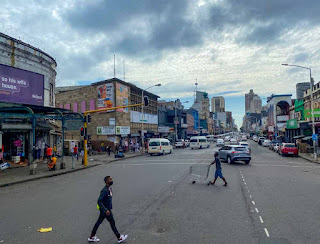
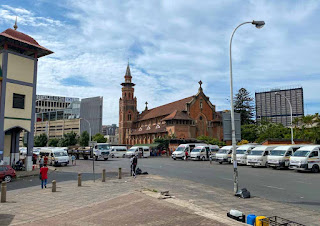
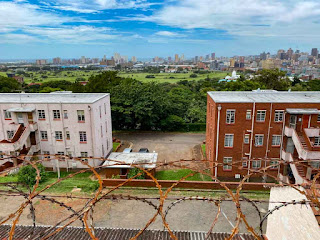
And yet the city isn’t quite achieving its potential. Its cosmopolitan make-up of races seem to be almost as separated as they were in the bad old days, as the city’s centre of gravity has shifted. As we drove to Victoria Market, the old colonial centre has almost been totally abandoned by the white population, who have moved to fancy new suburbs in North Durban. 

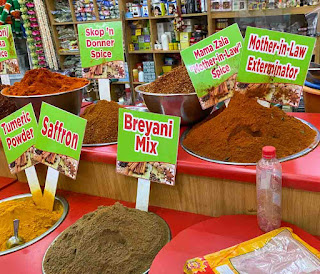
The town centre isn’t as run-down as Port Elizabeth’s, but it was interesting to notice not a single white face out there on the busy streets. Victoria Market used to be the centre of the Indian District, but this whole area seems to have been abandoned by them too – sadly there were fewer of the spice stalls that used to make this market so interesting. 

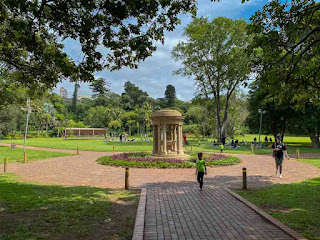
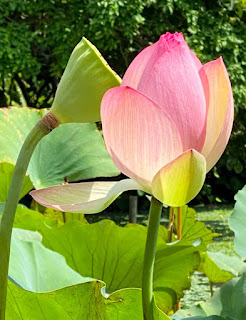
After the market, we visited the Botanical Gardens, where the Garden’s Curator took us on an interesting tour. As well as seeing plenty of exotic flora, there were some colourful birds and monkeys in there; and, it was nice to see that the Gardens were being used by all communities – Black, White and Indian.

On my second day, we were taken to a completely different view of Durban life – into the huge Umlazi Township, home to around 500,000 people, almost exclusively Zulu people. The township wasn’t your stereotypical set of shacks and poverty – instead it was really a flourishing self-contained suburb, complete with malls, neat houses, a university and hospitals (having said that, there were quite a few ramshackle shacks too).

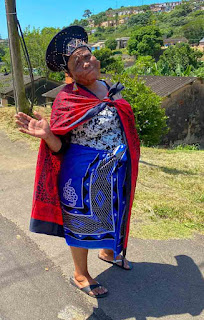
Our tour took us to meet a Sangoma – a Traditional Healer or Shaman (what would have been called a “Witch Doctor” in less politically-correct times). She was a perfectly ordinary lady the same age as me, whose role was a cross between a counsellor, a herbalist, and a physic – kind of like we’d have had gypsy fortune tellers back in Europe a few years ago.

As she talked us through her beliefs and treatments, it would have been easy to be sceptical of her claims of communing with her ancestors and of magical healing treatments. But, when you boil down pretty much any worldwide religion, there are some pretty outlandish claims (walking on water, ascending into heaven, changing into animals etc etc) – it all goes down to what you believe. However, I did like the fact that apparently one major sign of her having healing skills was that she burped a lot.

It was a strange kind of tour – sitting in her house as she told us all about her life and how she had discovered and developed her mystical skills – I had so many questions, but I didn’t want to seem like I didn’t believe her stories.

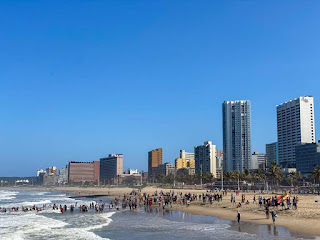
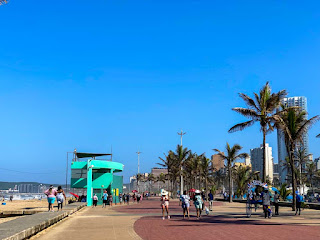
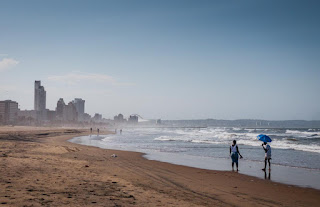
Having had this insight into modern Zulu life, Tracy and I went for a stroll along Durban’s lovely Golden Mile, where the rough seas were a strong deterrent to any swimming, but where crowds of young African people strangely crammed together into small patches of water cheek by jowl, rather than spread along the wide stretch of sand.

My final point about Durban is that the cruising experience here had improved markedly – you used to be docked in the commercial docks, and the port gates opened out onto a distinctly dodgy no-man’s land. Now, a brand new Cruise Terminal has been built in the redeveloped Point District, which used to be a no-go crime-ridden area, but is now being equipped with lots of fancy apartments. Our guide told us that within a couple of years, this area would be as safe and vibrant as the V&A Waterfront in Cape Town. It would be quite an achievement – that’s the kind of Durban Regeneration I would like to see.