Sunday, February 6, 2022

February 6th – Spectacular Antarctica

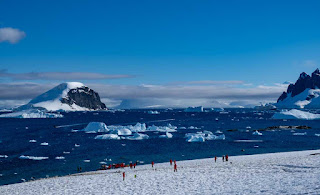
If yesterday was just a taster for what Antarctica had to offer, then today was a six-course feast. With our visit to the spectacular Danco Island (just off the Antarctic Peninsula), we were seeing the Antarctica of the TV documentaries – I was half-expecting David Attenborough to wander past at any point.

Under bright blue skies, the landscapes of the jagged ice-covered mountains all around us looked unbelievably beautiful, while the wind-sculpted icebergs floating past us looked like works of modern art – it was simply magical.

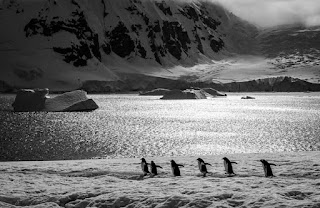
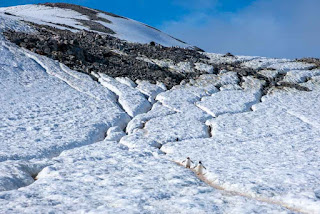
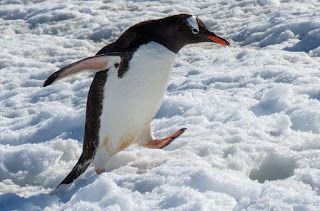
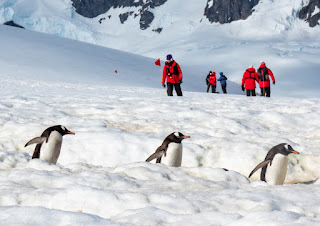
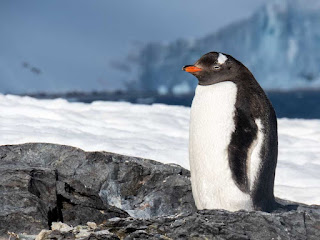
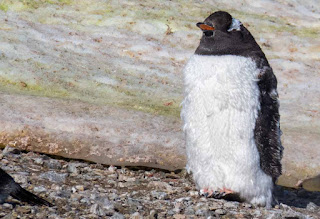
From the zodiac landing point, we climbed up the snow-covered hillside straight into a busy Gentoo penguin colony. It was just so fascinating to watch them trek drunkenly along their little highways up and down from the sea to their hillside homes in the rocks. On land, these creatures are so endearingly ungainly that they’re constantly stumbling and toppling over, like a bunch of arthritic old men who’ve over-indulged at a black tie dinner.

The great thing about penguins is that they constantly look confused – like they’re not quite sure where they’re going, or what they’re doing – but, they just pick themselves up again and carry on their mission to and from the sea. As they pass by each other, you can’t help but imagine their conversations – you could watch them for hours.

Sadly, we didn’t have hours – but, today ticked off all the Antarctica essentials, and left me totally in awe of Mother Nature. A day not to forget.
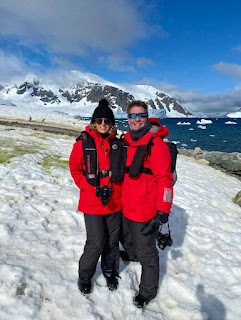
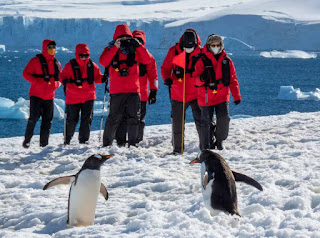
Thanks to Agata, our personal paparazzi!


Saturday, February 5, 2022

February 5th – Setting Foot on Antarctica!

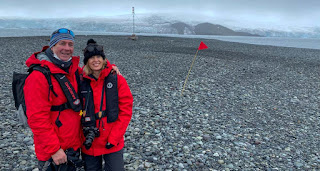
There aren’t many places that can get my adrenaline going these days, but today was one of them, as I finally got to set foot on my seventh continent – Antarctica!

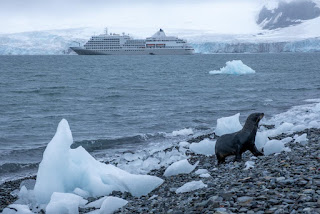
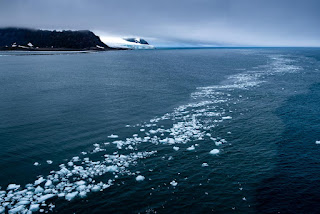
When you travel a lot, you can become a bit blasé about where you’re visiting; but just looking out of the window and seeing the thick ice shelves ahead of us and the lumps of blue ice floating in the water, was enough to get us over-excited about a place that we knew well from the TV programmes, but didn’t quite dare to think we’d reach.

I’d had a lengthy build-up to this long-awaited visit. I’ve had two previous trips to the White Continent not come about through cancelled flights and cancelled cruises; plus we had the will-we/won’t-we because of Covid; and then onboard, you have so many briefings and bio-security checks that you can physically feel the excitement building. Then, in the morning, you dress in all your many layers of Antarctic gear and anxiously wait for the call to go down to the zodiacs before you pass out from heat exhaustion.

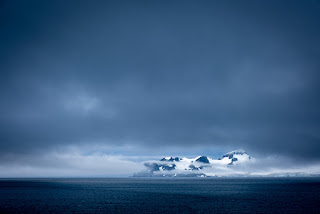
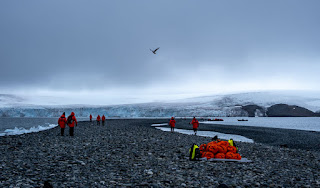
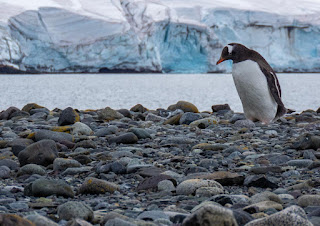
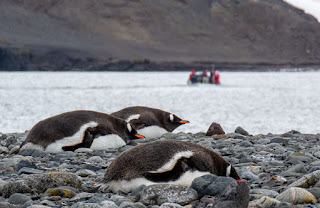
But, it didn’t disappoint. Our first stop was in the South Shetland Islands and Yankee Harbour – home to a Gentoo Penguin colony and various seals. Actually, from some angles it didn’t feel like how you’d expect Antarctica to be. We were dropped off on a bleak shingle beach with scarcely any ice in sight – that’s until you turn around and see the hills covered in thick glacial ice.

Some people who’ve been here before commented that it had looked better on their last visit (blue skies and more penguins), but all that was going through my mind was, “I don’t care - I’M IN ANTARCTICA!” – a cloudy day and 30 penguins was more than enough for me.

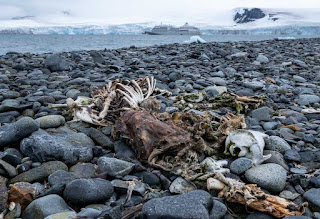
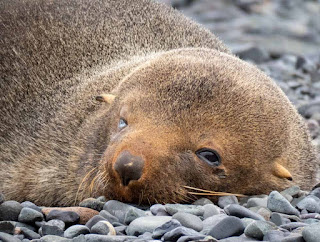
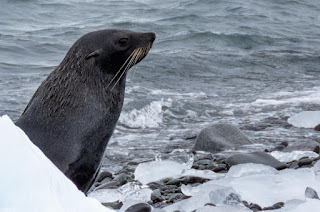
What struck me most was what an alien environment this was. That beach had a (quite literal) end-of-the-world feel to it – the pebbles were littered with the bones and carcasses of penguins, seals, and goodness-knows-what creatures. Seals would lumber across our path like we weren’t there, and the penguins stood still as statues like they were waiting for something exciting to happen.

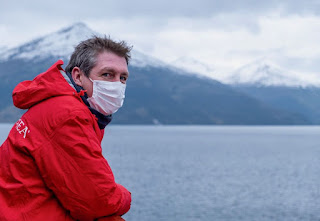
After 2 years spent behind face masks, the air felt so incredibly fresh and pure. While, the sounds were strange too – lumps of ice hitting the pebbles as they washed against them; fur seals barking like dogs; and most strangely of all, a fat weddell seal lying lazily on the beach singing like a chirping bird.

To me, this was one of the highlights of my life of travels. People in the know tell me that this was a low-key day in Antarctica – if that’s so, I can hardly wait for more.


Thursday, February 3, 2022

February 2nd – Glacial Progress From Chile

Covid restrictions have meant that we haven’t got the best from our land experiences in Chile (Punta Arenas wouldn’t even let us off the ship!); but at least it gave us more chances to appreciate the stunning scenery in the south of the country.

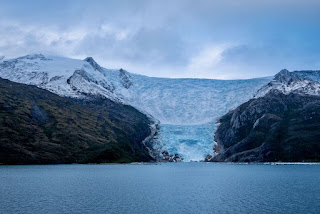
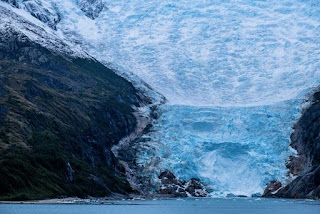
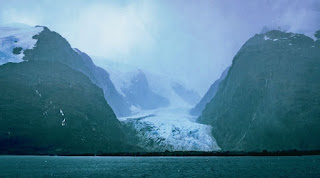
We headed away from Punta Arenas a day early so that we could explore the dramatically bleak landscapes around the Beagle Channel, a place that’s like a geography lesson in glacial features. As we explored the network of channels and islands, it made you wonder how on earth the first European explorers down here in the 19th century ever made it through this dangerously windswept labyrinth of waterways, in what must be some of the most inhospitable environments in the world.

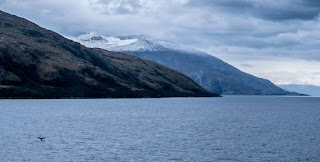
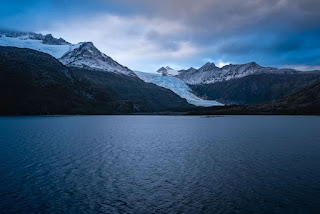
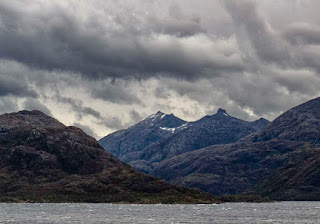
As the snow-capped mountains of the Cordillera Darwin approached, there was scarcely any vegetation clinging onto those barren hillsides, but there was plenty of birdlife to appreciate, and even the swish of a whale’s tail to get us excited (by some miracle, Tracy was taking a picture of something else, so you might spot it in the corner of her second photo).

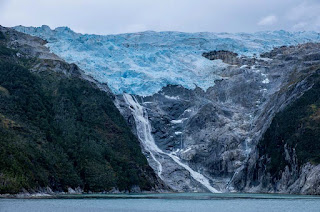
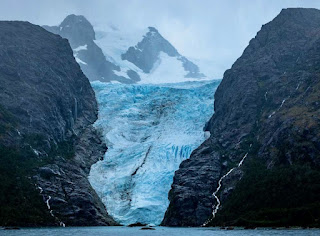
We then reached the star of the Beagle Channel show – Glacier Avenue, where 5 different glaciers make their way down the hillsides to the sea. It’s always astonishing to see the deep cobalt-blue of the glaciers – dense ice packed so hard by the thousands of years since it started its downhill journey, that the daylight gets absorbed and the red light is filtered out, leaving only the light at the blue end of the spectrum to be transmitted through it.

These incredible natural sights have left us with a spring in our step before we head into the dreaded Drake Passage tomorrow – forecasts of moderately rough seas, are only slightly tempering our excitement for our arrival in Antarctica!


Tuesday, February 1, 2022

January 31st – Nature in the Raw in the Chilean Fjords

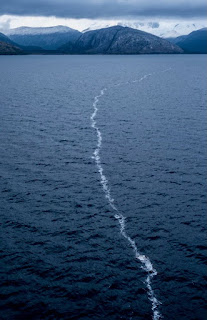
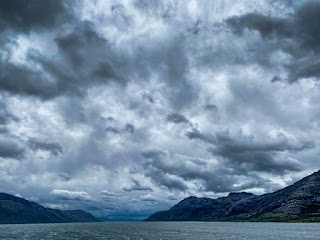
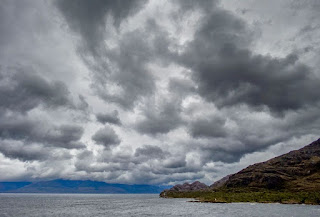
There can’t be many more places more bleak than the Chilean Fjords – a wind-lashed series of rugged rocks, isolated islands and moody mountains with scarcely a tree in sight, under perpetually grey skies. Yet, there’s an awesome beauty to be savoured in this scattering of islands and narrow channels down in Chile’s Deep South, plus the other good thing is that they provided welcome shelter from the very heavy seas that had been tossing us about for the previous day.

As the ship crept quietly in between the steep rockfaces of the islands, we passed by jumping seals and sealions, while albatrosses, petrels and skuas rode the strong gusts circling above us. As the wind blew through, occasionally, we’d mistake the spray of the sea for a spout of a whale, but we didn’t catch a sight of any whales, even though we knew they were down there.

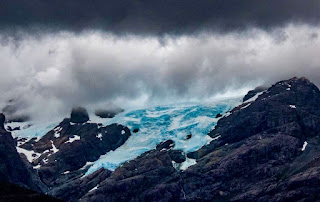
To complete the elemental environment, heavy rain started to blow sideways at the ship as the winds became so strong that it was dangerous to be on the outside decks. However, the views of the now-misty fjords just got better and better. Thin waterfalls cascaded down the side of the rockface like jagged white thunderbolts, and we passed by breathtaking blue glaciers grinding their way down the hillside towards the water. The two glaciers that we saw were in retreat, so they weren’t quite reaching the icy water and we couldn’t get to see any calving, but it was still an amazing sight to behold from your own balcony.

You don’t get many chances to see nature in the raw like this – this was a day to remember.


Sunday, January 30, 2022

January 29th – A Sunny Day in Chiloé

The “Isla Grande” of Chiloé in Chile’s deep south is normally an island of almost perpetually dreary grey skies and 200 days of rain a year, so to wake up to crisp blue skies and bright sunshine was a very pleasant surprise. That meant that this island of rolling green fields and bucolic landscapes was looking at its very best, for another day of “panoramic” coach tours.


We came into its attractive capital, Castro, where we saw the island’s trademark “palafitos” – colourfully-painted stilt houses hanging precariously over the water’s edge. On an island of so many attractive rural vistas, these picturesque stilt houses made the town almost as photogenic as the countryside. 


Chiloé is probably most famous for its collection of UNESCO recognised wooden churches, built in an architectural style that’s unique to the island; and, today we got to see four of them. We started off with the least typical church, in Castro, whose grand façade was painted in an eye-popping yellow and purple colour scheme that looked like it had been selected by a 5-year old.


Our next stop was to the much simpler Nercon Church, which followed the standard Chiloé template of wooden-shingled façade, topped by a three-tiered tower; before heading to the ramshackle village of Chonchi, where its distinctive painted church stood at the top of an impossibly steep hill that led down to the fishing harbour below. Our final church was the unadorned Villipuli Church, in an isolated location by the sea.


This is a beautiful island that’s always felt like a place on the edge of civilisation; but it appears that civilisation is edging closer towards it. More outsiders are being attracted to its simpler lifestyles and pristine environment; while, a new bridge is planned to connect it to the mainland in 2025. Our guide felt that overall this would be a good thing – he thought that the increased opportunities here would prevent its young people from moving away. Let’s hope that Chiloé can keep hold on to its unique culture.


Friday, January 28, 2022

January 28th – Panoramic Puerto Montt

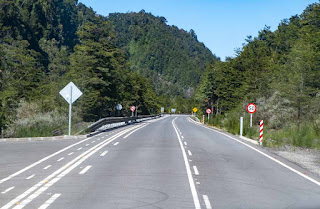
If there’s one place where doing a “Panoramic Tour” doesn’t leave you feeling short-changed, then it’s in Chile’s stunning Lake District – an area of incredible natural beauty, full of rolling fields, glistening lakes, and awesome volcanoes, that look amazing even from a bus window.

Again, the Chilean authorities wouldn’t let us off the bus, but the views more than compensated for that. Because, the Lake District is one lovely vista after another; particularly after the drab brown desert backgrounds of northern Chile, these emerald green landscapes were looking fantastic.

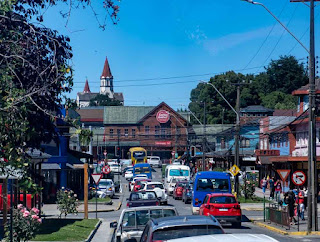
The countryside reminded me of New Zealand, while the pretty lakeside town of Puerto Varas displayed its German roots with quaint architecture that wouldn’t have looked out of place in Bavaria (it was founded by German immigrants in the 1850s).

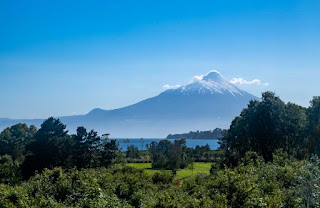
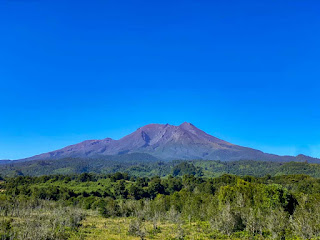
But, overlooking everything was the dominating presence of the perfectly conical Volcan Osorno, its lofty peak still cloaked in snow, even on this warm summer’s day. Reassuringly, its last eruption was back in 1835 (when Charles Darwin happened to be passing by), although the other big volcanic beast that we could see (Volcan Calbuco) is a bit more active – last erupting in 2015.

The Chilean Lake District is an area that deserves much deeper exploration than a 3-hour drive-by – we’re putting tentative plans together to come back sooner rather than later.


Tuesday, January 25, 2022

January 24th – Antofagasta Anti-climax

After much deliberation from the Chilean authorities, they finally decided that we would only be allowed off the ship on a “Panoramic Bubble Tour” – that means you can be driven around but you can’t get off the bus. In most cities that would be fairly underwhelming, but for a mainly modern city like Antofagasta, built on the edge of the barren desert, then we really weren’t going to see the city at its best.


The city has grown fast over the past couple of decades as the port for Chile’s lucrative copper mines out in the desert, but that doesn’t necessarily make for a particularly attractive urban environment to be driven around. There was a surprising amount of greenery for a city build on the edge of the driest desert in the world, and the street life was quite busy around the market, but other than that, the guide struggled to point out much of interest. A city like this needs to be explored on foot at street level, not bus level.


Actually, the most visually attractive part of the city could be seen off the side of the ship in the harbour – a collection of what initially looked like floating plastic bags in the water, but on closer inspection turned out to be some quite gruesome-looking jellyfish pulsating around menacingly. The welcome we were getting on land wasn’t the warmest, and it looked like the seas were doing their best not to look enticing either.