Friday, January 28, 2022
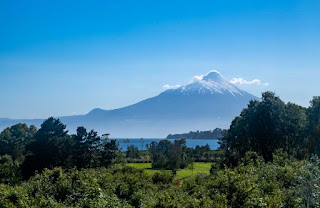
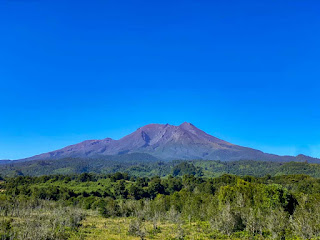
January 28th – Panoramic Puerto Montt
Tuesday, January 25, 2022
January 24th – Antofagasta Anti-climax
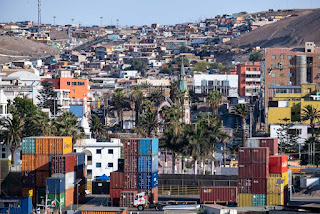
After much deliberation from the Chilean authorities, they finally decided that we would only be allowed off the ship on a “Panoramic Bubble Tour” – that means you can be driven around but you can’t get off the bus. In most cities that would be fairly underwhelming, but for a mainly modern city like Antofagasta, built on the edge of the barren desert, then we really weren’t going to see the city at its best.
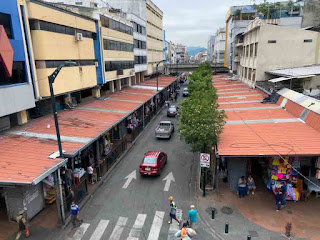
The city has grown fast over the past couple of decades as the port for Chile’s lucrative copper mines out in the desert, but that doesn’t necessarily make for a particularly attractive urban environment to be driven around. There was a surprising amount of greenery for a city build on the edge of the driest desert in the world, and the street life was quite busy around the market, but other than that, the guide struggled to point out much of interest. A city like this needs to be explored on foot at street level, not bus level.
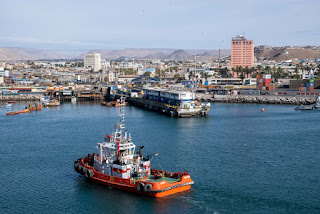
Actually, the most visually attractive part of the city could be seen off the side of the ship in the harbour – a collection of what initially looked like floating plastic bags in the water, but on closer inspection turned out to be some quite gruesome-looking jellyfish pulsating around menacingly. The welcome we were getting on land wasn’t the warmest, and it looked like the seas were doing their best not to look enticing either.
Sunday, January 23, 2022
January 22nd – A Tantalising View of Arica
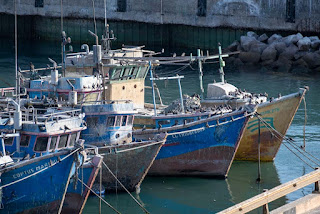
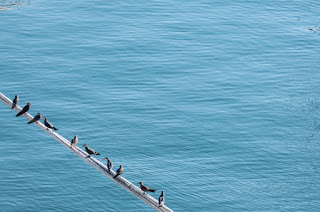
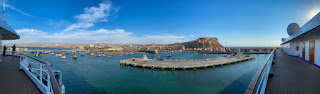
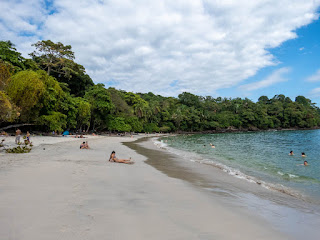
So, we were left with a tantalising view of this town on the edge of the barren Atacama desert. In the port around us, there was a strong smell of fish, and the harbour was busy with fishing boats, while the enormous amounts of seabirds dive-bombing its waters, showed you that this stretch of coastline is also rich in sealife.
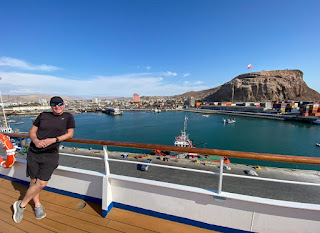
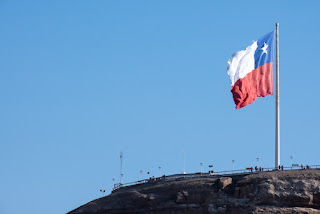
Immediately in front of us was the huge wedge-shaped hill of El Morro, topped by what’s the largest flag in Chile. That flag’s so large because this was once a battlefield, when Chile annexed the town from Peru in the War of the Pacific in 1879.
When you’re looking at the beige landscapes of the lifeless desert behind the town, you may be wondering why anyone would dispute ownership of this land – but, of course, the Atacama is rich in the minerals that have brought Chile so much wealth in the last 150 years.
It would have been nice to get off the ship to discover more, but our view from the ship showed us the most important points of Arica’s story – a border town that’s grown quickly based on fishing, on historic battle sites, and on the bounties of the Atacama Desert.
Wednesday, January 19, 2022
January 18th – A Brief Glimpse of Guayaquil
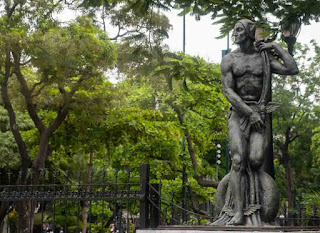
But, when you think back to what Guayaquil was experiencing at the start of the pandemic in 2020 – so many dead that its morgues and cemeteries were being overwhelmed and bodies were being just dumped on the street – maybe it wasn’t surprising that the city’s authorities were being so abundantly cautious.
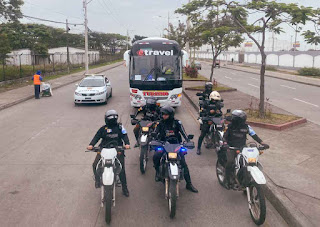
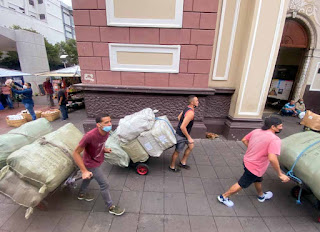
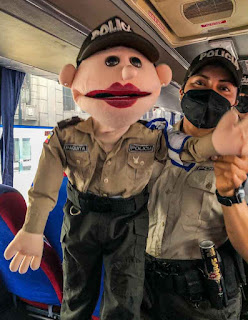
To make sure that we didn’t break their stringent protocols, we were even given a police escort all the way round – no-one was to be allowed off the bus, even for a toilet break (on a three-hour trip, that was a challenge for some of us!). We did have one bizarre visitor get on the coach though – at one point, a heavily-armed policewoman got on with a ventriloquist dummy telling us to take some photos. No one could fathom why this was happening, but at least it was an attempt to make the city more welcoming.
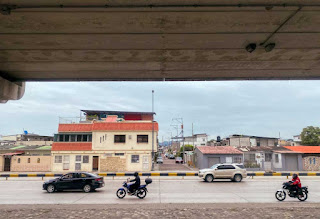
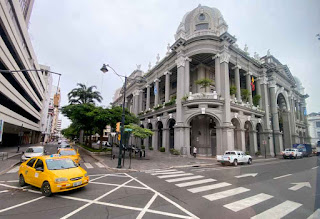
Actually, a couple of decades ago, this was a place where you’d probably be glad not to get off the bus, such was its reputation for crime and disorder. However, Guayaquil has undergone something of a renaissance in the last few years, so what I was seeing from the bus made me keen to explore further.
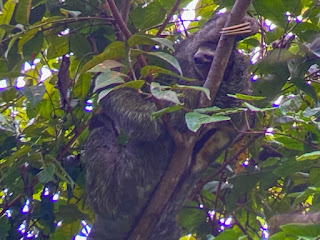
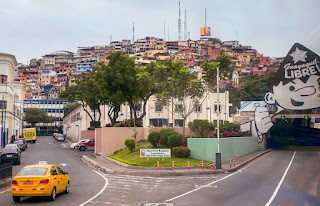
Of course, you can never get a real sense of a city from a bus window, but these were the overall impressions.
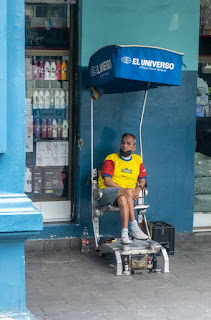
1. The huge number of policemen and security guards absolutely everywhere. There must be better ways to make your city safe.
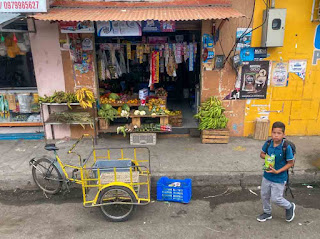
2. This is a very mixed city – some very smart areas and some really seamy areas in close proximity, which is an explanation for the proliferation of razor wire and iron bars on every door and window.
3. There were lots of people sweeping streets and there wasn’t much graffiti – there appears to be some good attempts to restore civic pride.
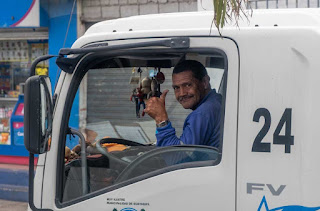
4. The city seemed to have a nice buzz about it – lots of people waving hellos at us.
5. Guayaquil appears to be on the up – a decent public transport system and plenty of new building projects show that this is a city with a plan.
Sunday, January 16, 2022
January 15th – A Walk on the Wild Side at the Manuel Antonio National Park
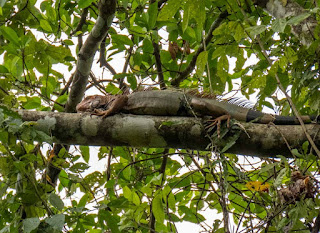
We trekked through thick rainforest and dense mangroves, emerging at an absolutely gorgeous beach of idyllic white sands that looked like something from a tourist brochure. Our guide was excellent at pointing out what we were passing on the way – it was the small details (insects, leaves, bats etc) that were as interesting as the stand-out sights of sloths and monkeys.
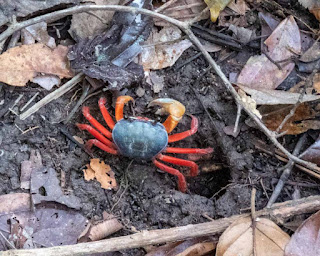
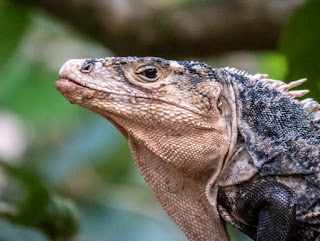
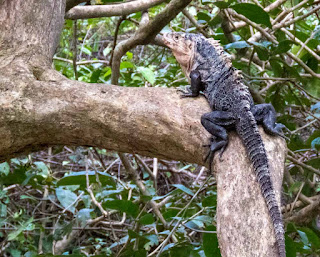
Apart from the land crabs that had easily-spottable bright red legs, most of these forest creatures were doing their best not to stand out from the crowd, so we needed the guide’s eagle eyes and his powerful telescope to make out most of the amazing fauna he somehow was able to spot in the dense foliage. He’d point out a sloth or an iguana in the trees that was impossible to spot with the naked eye, but then his telescope would bring these remarkable creatures into focus.
One animal that it was impossible to miss was the howler monkey, who announced his presence with a huge roar, and just as we looked up to see his presence rustling away in the trees directly above us, he attempted to pee on us. This really was nature in the raw.
With the heat and humidity, it was a fairly exhausting trek, but great fun to get so close to nature. Costa Rica is somewhere we need to come back to.
January 14th – Experiencing Pura Vida in Puntarenas
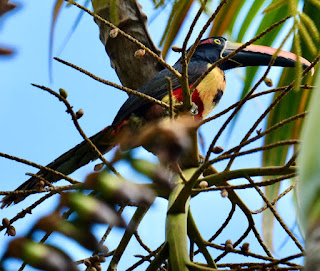
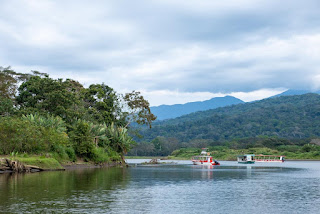
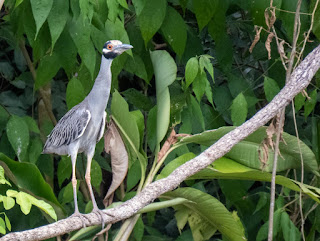
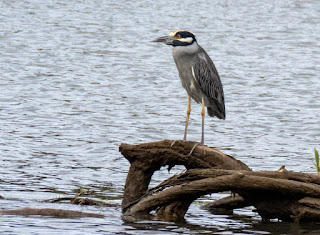
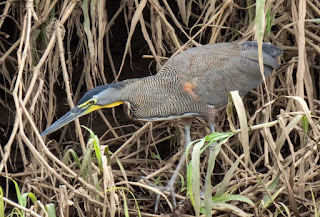
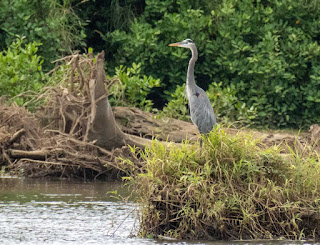
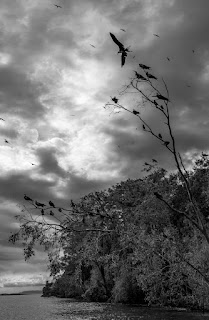
From the town of Puntarenas, I took a trip along the Tarcoles River to see some of the wonderful array of wildlife (and particularly birdlife) that lives along its banks. Even for someone who’s not really into bird-spotting, it was quite amazing how much there was to see. We started off with views of wading herons and hopping vultures along the river’s edge; in the trees were pink spoonbills and eagles holding onto freshly caught fish; and in the air were soaring frigate birds and enormous pelicans. Our guide reckoned that we saw at least 30 different species of birds in our time on the river.
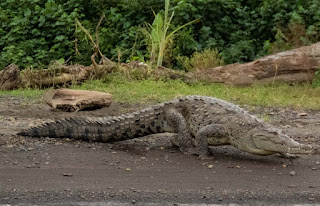
However, the stars of the show were the menacing-looking crocodiles lurking on the banks or floating like logs in the river. Most of the time they were still as statues, but then they’d leap into life and suddenly launch themselves into the river. We were told that they weren’t considered a danger to humans (which must have been a relief to the fishermen on the banks), but they had been known to take down the odd cow who ventured too close.
My favourite sight was of the Jesus Christ lizard (he literally walks on water), but he was too small and fast for me to capture on film; while the capuchin monkeys jumping around in the trees were great to watch. Sadly, most of my photography consisted of blurry shapes in the trees, so these photos are the best of a bad bunch.